How to Take Care of Your Cuckoo Clock

Cuckoo clocks can last a lifetime or even become beloved heirlooms if looked after properly. So, if you want to know how to take care of your cuckoo clock, here are a few handy tips — ranging from regular light dusting to internal cleaning done once every few years. As they are powered solely by weights and chains, it is important to keep the workings of any decorative wall clock clean — both inside and out. This will help the delicate system to run efficiently for years to come!
Weekly Cleaning
The most regular piece of upkeep essential for taking care of your cuckoo clock is a weekly clean of the exterior. This will protect the inside mechanism from dust, which means a smaller chance of internal issues in the long run. Dust with a light duster, such as a feather duster or light cloth — be careful not to use a cleaning product that might damage wood or other delicate materials. Use a cleaner with a natural oil base or made specifically for hardwood surfaces. Some people might opt for cleaning their cuckoo clocks with a spray duster, instead, which is especially good for detailed sections of the exterior and parts of the inner-workings, which we discuss in more detail below.
A Deeper Clean
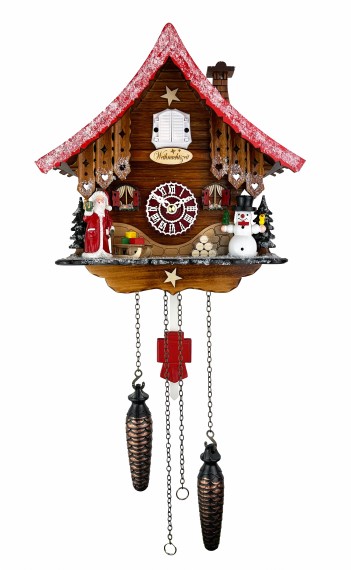
For more ornate traditional cuckoo clocks, you may need to use a cotton earbud or another small cleaning device to get into the grooves of the intricate woodwork. Use very mild soapy water to remove any build-up on the outside of your cuckoo clock if this is the case. This sort of deep clean need not be done each week, but rather whenever you notice dust or grime start to build.
Wood Preservation
A crucial part of cuckoo clock care is preserving the wood. Those who would like to ensure the wood of their handmade cuckoo clock looks as bright and shiny as when it was new might consider finding a wood oil. This will help preserve the material, adding moisture to the wood and an added layer of protection. Make sure the oil you choose is compatible with the wood of your cuckoo clock, and be mindful not to use too much or to go near any entrance to the clockwork, as this could damage the mechanism.
Cleaning Inside a Cuckoo Clock
Another key part of cuckoo clock maintenance is the internal clockwork — this is a go-to thing to check if you notice your cuckoo clock running slightly slower than it should, which is likely due to a slight build-up within the clockwork itself.
Cuckoo clocks achieve their time-keeping from a system of hanging weights and inner wheels. It is because of how expertly-made the mechanism is that means it should be kept clear of dust, dirt, or excess oil — anything that could interrupt its smooth workings as best possible.
Oftentimes, you can access the clockwork via a panel at the back of the cuckoo clock, which is how you check there are no build-ups that could stop the internal mechanism from working properly. A good initial first step is again to use a duster spray to loosen any dust or grime sitting within the mechanism — without risking any damage. It is important that all cleaning is completed very carefully, as you do not want to disturb any wheels or barrels.
If you are confident in your clock cleaning ability, you might next use a toothpick dipped in a tiny amount of fully-synthetic oil to dab into the small holes — known as pivot shafts or oil sinks — within the clockwork. Be aware that too much oil can damage the clockwork, so use carefully and sparingly. One drop in each oil sink is sufficient for a cleaning once every few years.
Take a look at our extensive collection of traditional German cuckoo clocks here.